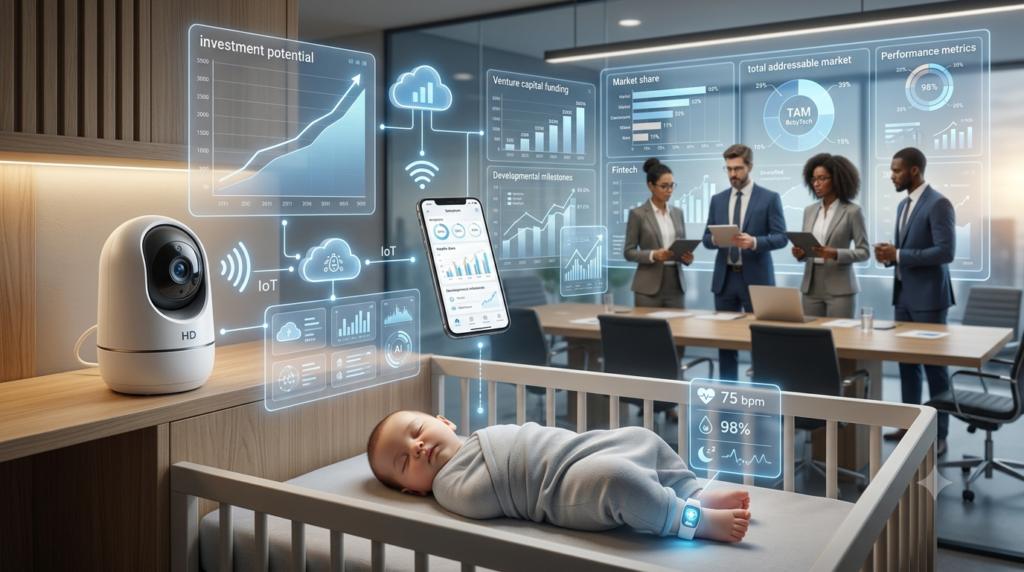
The BabyTech industry has evolved from simple baby monitors into a rapidly expanding ecosystem of connected devices, artificial intelligence (AI), wearable sensors, and cloud-based parenting platforms. Investors are increasingly viewing this sector as more than just a consumer electronics niche. Instead, it sits at the intersection of healthcare, Internet of Things (IoT), software-as-a-service (SaaS), and digital wellness.
Parents today expect more than a device that simply streams audio or video. They want products that monitor sleep quality, track breathing patterns, analyze feeding schedules, detect room temperature changes, and provide personalized recommendations through smartphone apps. This growing demand has created attractive opportunities for startups and established technology companies alike.
Investment activity reflects this trend. Venture capital firms, strategic corporate investors, and private equity groups have funded companies developing smart baby monitors, wearable health trackers, connected nursery devices, AI-powered cameras, and subscription-based parenting platforms. While competition has intensified, investors continue to seek companies with scalable technology, recurring revenue models, and strong customer loyalty.
This article explores why BabyTech companies attract investment, the business models investors favor, major market trends, real-world case studies, and the opportunities and risks shaping the industry’s future.
What Is BabyTech?
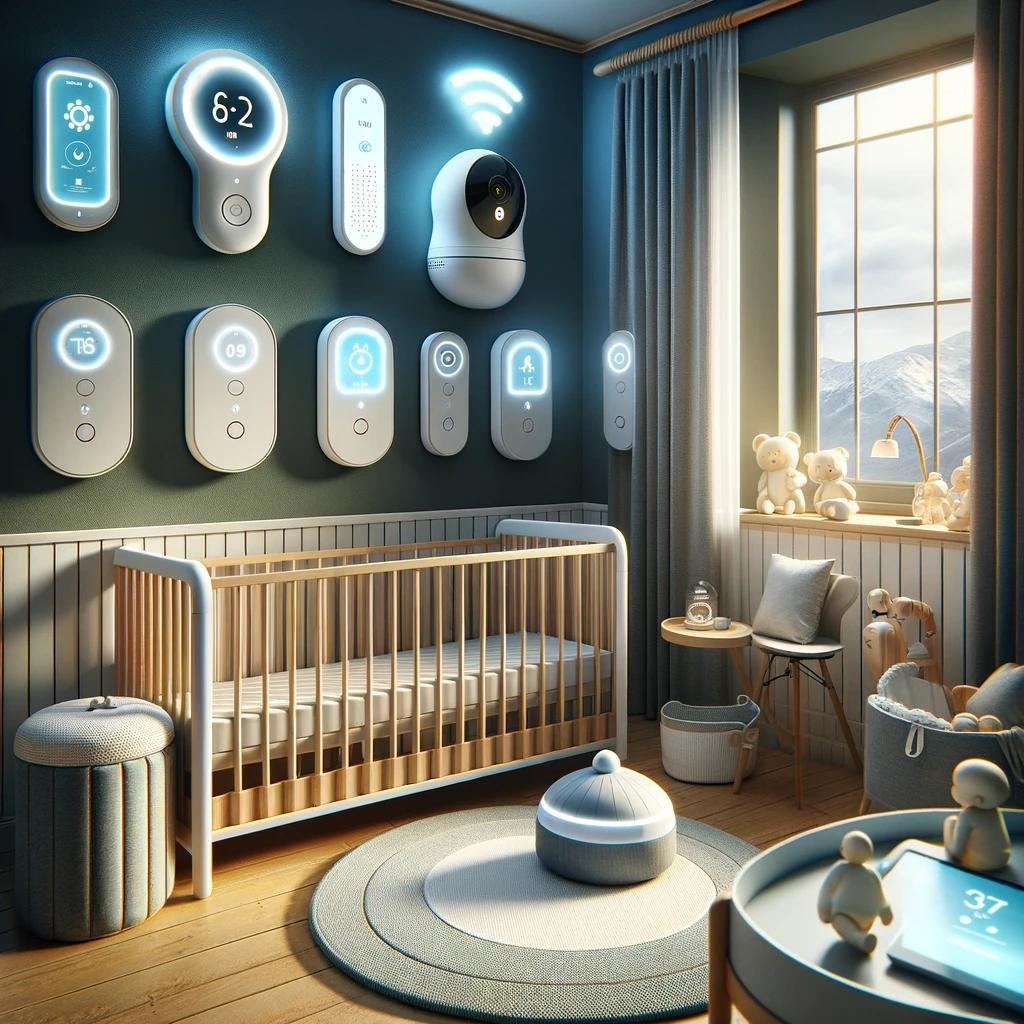
BabyTech refers to technology products designed to improve infant care, safety, health monitoring, and parenting experiences through connected devices and intelligent software.
The sector includes products such as:
- Smart baby monitors with HD video
- AI-powered sleep monitoring cameras
- Wearable infant health trackers
- Smart thermometers
- Connected bottle warmers
- Smart bassinets
- Nursery environmental sensors
- Parenting mobile applications
- Connected feeding devices
Unlike traditional baby products, modern BabyTech devices collect data continuously and synchronize information through cloud platforms or mobile applications. This allows parents to monitor their child remotely while receiving real-time alerts and personalized insights.
Why Investors Are Paying Attention
Several powerful trends make BabyTech attractive from an investment perspective.
Growing Digital Parenting
Today’s parents are digital natives who expect connected experiences in nearly every aspect of daily life. Baby products are increasingly becoming extensions of smart homes.
This shift has increased willingness to purchase premium technology products that provide convenience, reassurance, and health insights.
Higher Spending Per Child
In many developed markets, declining birth rates have coincided with increased spending per child. Families often invest more in products that promise improved safety or convenience.
Rather than purchasing multiple basic devices, many parents prefer integrated ecosystems offering cameras, health tracking, sleep analysis, and mobile apps.
Healthcare Integration
BabyTech increasingly overlaps with digital healthcare.
Some connected devices now monitor:
- Heart rate
- Oxygen levels
- Sleep quality
- Movement
- Breathing patterns
Although consumer devices cannot replace medical care, investors recognize growing demand for preventive health monitoring.
Market Growth and Industry Outlook
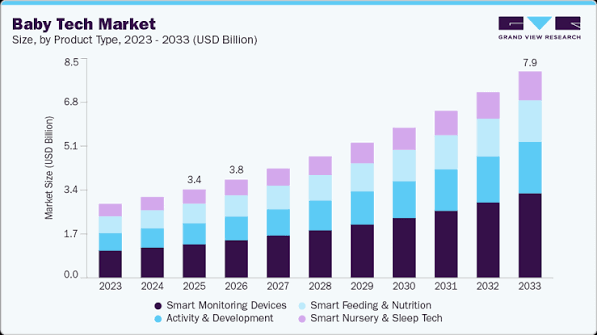
Industry analysts expect the BabyTech market to expand steadily throughout the coming decade, driven by rising smartphone adoption, improvements in wireless connectivity, artificial intelligence, and consumer demand for smart home integration. Market research firms consistently identify North America as a leading region, while the Asia-Pacific market is projected to experience particularly rapid growth because of expanding middle-class populations and increasing technology adoption. Growth is also supported by the increasing availability of connected healthcare devices and digital parenting platforms.
Several factors are accelerating market expansion:
- Rising adoption of IoT-enabled consumer products
- Increased awareness of infant safety
- Growing use of AI-powered monitoring
- Expansion of subscription services
- Stronger integration with smart-home ecosystems
Business Models Investors Prefer
Investors rarely fund hardware alone.
Instead, they seek companies that combine physical products with recurring digital revenue.
Hardware + Subscription
Many BabyTech companies sell a connected device while offering premium monthly services.
Subscriptions may include:
- Sleep analytics
- Health reports
- Cloud video storage
- AI-generated alerts
- Personalized parenting insights
Recurring revenue generally improves customer lifetime value and business predictability.
Software Ecosystems
Companies that create complete ecosystems often outperform businesses selling standalone devices.
Examples include:
- Mobile apps
- Family dashboards
- Remote monitoring
- Data synchronization
- Multi-device integration
These ecosystems encourage customer retention while creating opportunities for future product expansion.
Data-Driven Services
Anonymous usage data helps companies improve algorithms, enhance product performance, and develop new features.
Investors often value businesses capable of converting hardware customers into long-term software subscribers.
The Role of Artificial Intelligence
6
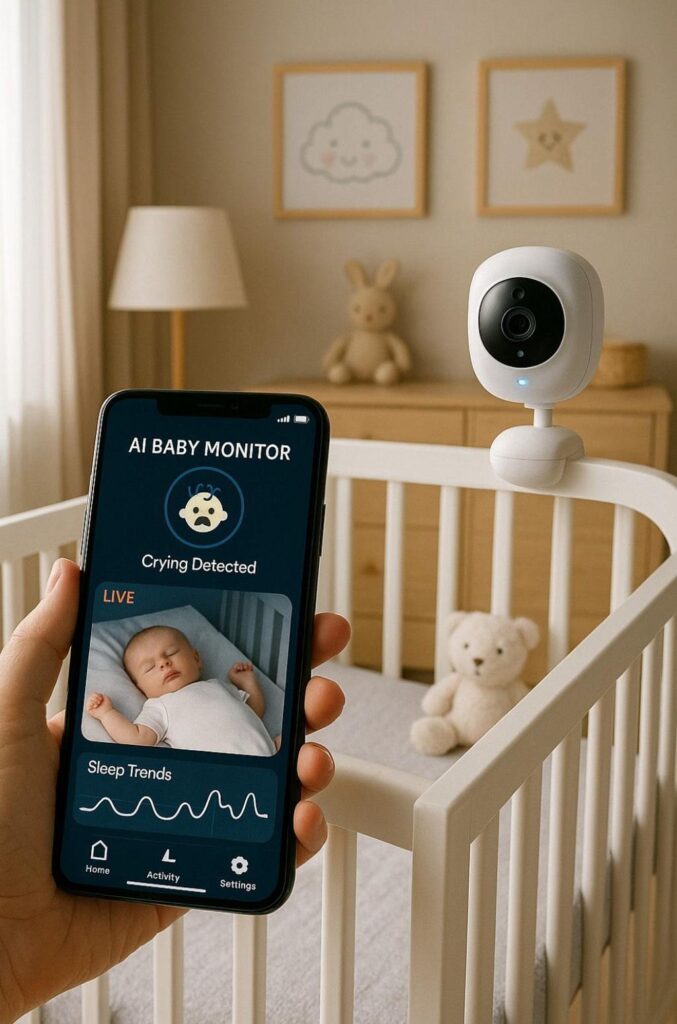
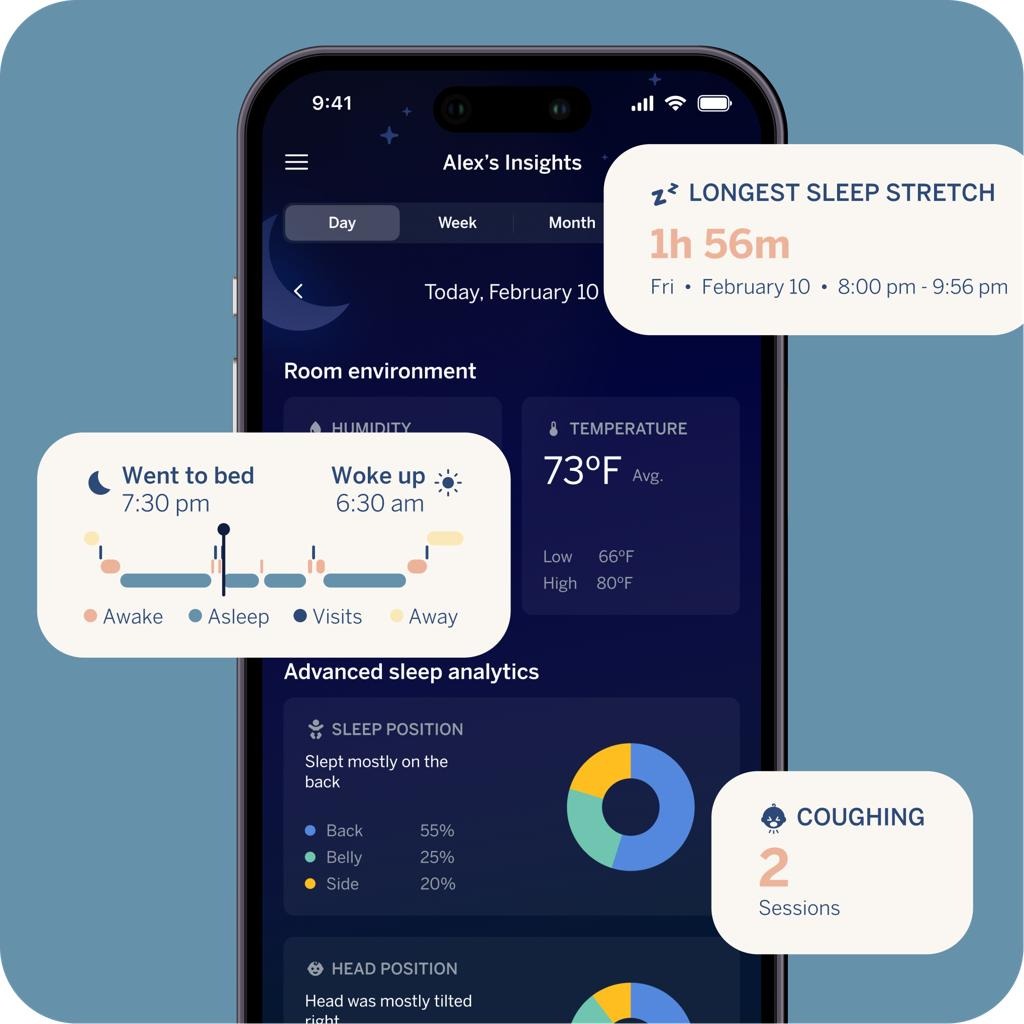
Artificial intelligence has become one of the strongest investment drivers in BabyTech.
Modern systems can analyze:
- Sleep cycles
- Crying patterns
- Room conditions
- Movement
- Environmental changes
Instead of merely displaying information, AI can provide recommendations.
For example, software may suggest:
- Adjusting room temperature
- Changing feeding schedules
- Improving bedtime routines
- Detecting unusual movement patterns
Companies that develop proprietary AI algorithms often receive greater investor interest because software creates stronger competitive advantages than hardware alone.
Connected Devices Create Long-Term Customer Relationships
Connected products differ significantly from traditional baby products.
A conventional baby monitor may be used for only a few years.
A connected platform, however, allows companies to maintain customer relationships through:
- App updates
- Premium subscriptions
- Additional hardware
- Family accounts
- Smart-home integrations
Investors appreciate businesses capable of increasing customer lifetime value rather than relying solely on one-time product sales.
What Investors Evaluate Before Investing
Professional investors typically examine multiple aspects of a BabyTech company before making funding decisions.
Technology Differentiation
Does the company possess unique technology?
Examples include:
- AI algorithms
- Sensor technology
- Computer vision
- Machine learning
- Patent portfolios
Regulatory Compliance
Products involving health monitoring must comply with relevant regulations and safety standards.
Companies demonstrating strong compliance frameworks often appear less risky to investors.
Cybersecurity
Connected baby devices collect sensitive family data.
Investors therefore expect:
- Secure cloud infrastructure
- Encryption
- Privacy protection
- Regular software updates
Manufacturing Scalability
Hardware businesses must demonstrate reliable production capabilities.
Investors assess:
- Manufacturing partnerships
- Supply chain resilience
- Component sourcing
- Inventory management
Financial Performance
Key metrics include:
- Gross margin
- Customer acquisition cost
- Subscription growth
- Retention rates
- Revenue diversification
Real Company Case Studies
1.
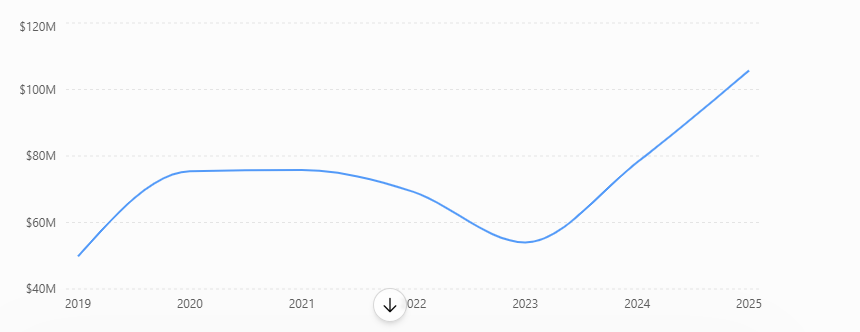
Owlet developed a smart sock that monitors an infant’s heart rate and oxygen levels while sleeping. The company attracted substantial venture funding before becoming publicly traded through a SPAC transaction.
Owlet’s strategy illustrates how combining hardware with software subscriptions can create a more attractive investment story. At the same time, the company has faced regulatory scrutiny, underscoring the importance of compliance for health-related consumer devices.
2. Nanit
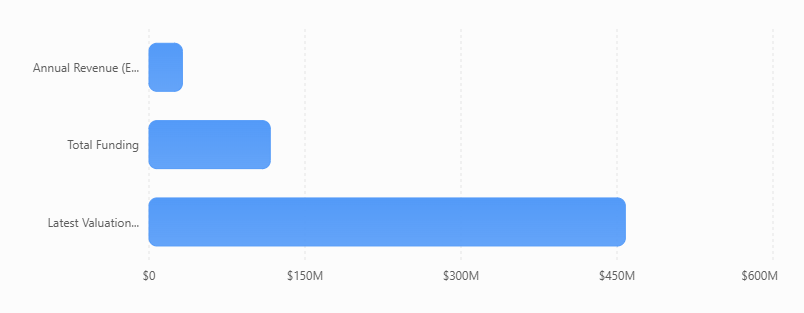
Nanit combines an AI-powered camera with sleep analytics and mobile software.
Its subscription services generate recurring revenue beyond initial hardware sales, making the business model attractive to investors focused on predictable cash flow.
3. Hatch
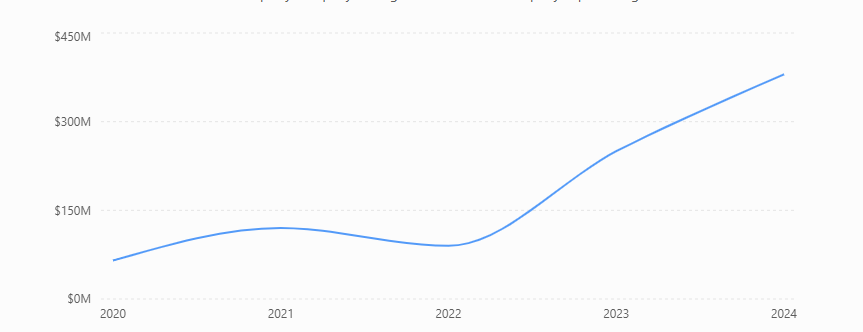
Hatch has expanded beyond smart sound machines into a broader ecosystem that includes lighting, routines, and app-based features. This ecosystem strategy encourages repeat purchases and strengthens customer loyalty.
4. CuboAi
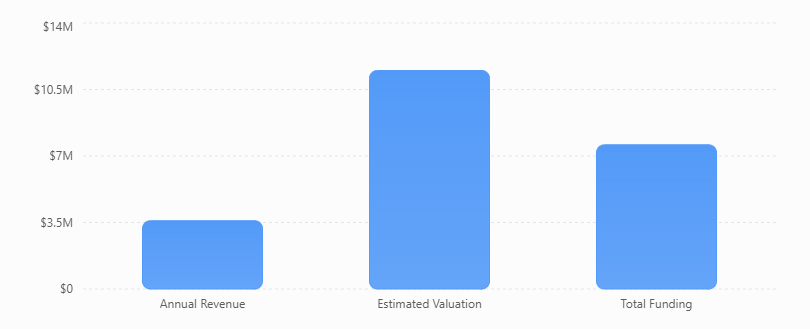
CuboAi uses artificial intelligence to monitor infant movement and sleeping positions while sending alerts to parents.
Its emphasis on AI-powered safety features demonstrates how software capabilities can differentiate products in a crowded market.
Why Venture Capital Firms Like BabyTech
BabyTech aligns with several characteristics venture capital firms often seek:
- Large addressable markets
- Recurring subscription revenue
- Strong consumer engagement
- Global expansion opportunities
- Software scalability
- AI integration
- Cross-selling potential
A startup that begins with a baby monitor may later introduce smart bassinets, health trackers, educational products, or broader family wellness services.
This expansion potential increases long-term valuation opportunities.
Industry Challenges
Despite promising growth, investors carefully evaluate several risks.
Privacy Concerns
Parents expect connected devices to protect sensitive family information.
Data breaches can significantly damage consumer trust.
Regulatory Changes
Companies making health-related claims may face stricter oversight from regulators, increasing development costs and compliance requirements.
Supply Chain Risks
BabyTech companies depend heavily on semiconductor components, sensors, cameras, and wireless technologies.
Global supply chain disruptions can affect manufacturing schedules and profitability.
Competitive Pressure
Major technology companies and established baby-product brands continue entering the connected-device market.
This increases customer acquisition costs while reducing pricing power.
Birth Rate Trends
Declining birth rates in some developed countries may slow long-term market growth, making international expansion increasingly important.
Emerging Opportunities
Several trends may reshape the BabyTech landscape over the next decade.
Predictive Health Monitoring
Future devices may identify potential health concerns earlier through advanced AI analysis.
Smart Home Integration
Baby devices increasingly connect with:
- Smart speakers
- Smart lighting
- Home security systems
- Climate controls
Integrated ecosystems improve convenience while strengthening customer retention.
Telehealth Integration
Healthcare providers may eventually integrate selected BabyTech data into remote consultations, creating new partnerships between technology companies and healthcare organizations.
International Expansion
Emerging markets present significant opportunities as smartphone adoption, internet connectivity, and disposable incomes continue to rise.
Lessons for Entrepreneurs Seeking Investment
Companies looking to attract investors should focus on more than innovative hardware.
Successful fundraising often depends on demonstrating:
- A clear recurring revenue strategy
- Proprietary technology
- Strong intellectual property
- Secure cloud infrastructure
- Scalable manufacturing
- Regulatory readiness
- High customer retention
- Sustainable unit economics
Businesses capable of combining consumer electronics with software subscriptions generally receive stronger investor interest than companies selling hardware alone.
Conclusion
BabyTech has evolved into one of the most dynamic segments within connected consumer technology. Advances in AI, IoT, cloud computing, and digital health have transformed baby monitors and nursery devices into intelligent platforms that deliver continuous insights and ongoing value to families.
For investors, the appeal lies not only in innovative products but also in business models built around recurring revenue, software ecosystems, and long-term customer relationships. Companies that successfully combine trusted hardware, secure data practices, regulatory compliance, and scalable subscription services are well positioned to capture growing demand.
While challenges such as privacy concerns, competitive pressures, and regulatory requirements remain, the sector’s continued innovation suggests that BabyTech will remain an attractive destination for venture capital, strategic partnerships, and long-term investment. As connected parenting becomes more mainstream, businesses that solve real problems for families while building sustainable digital ecosystems are likely to stand out in the years ahead.