Introduction
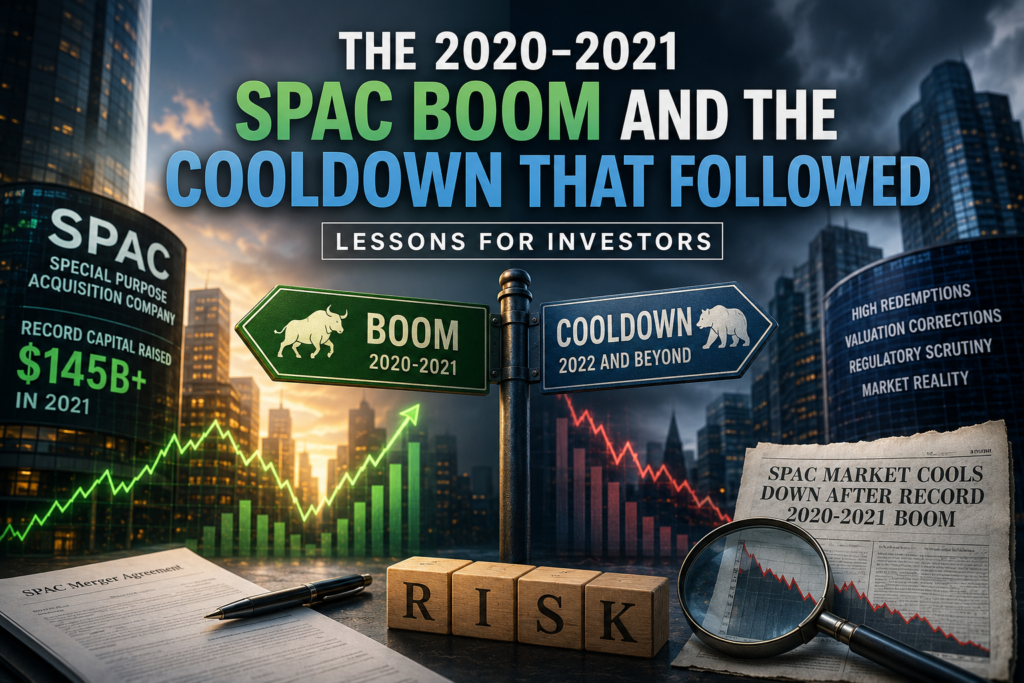
Between 2020 and 2021, Special Purpose Acquisition Companies (SPACs) became one of the hottest trends on Wall Street. Hundreds of blank-check companies raised billions of dollars, promising investors access to exciting private businesses before they became publicly traded. Electric vehicle startups, fintech companies, space businesses, and biotech firms rushed to merge with SPACs instead of following the traditional IPO route.
For a brief period, SPACs appeared to be the future of public listings. Celebrity sponsors, billionaire investors, and institutional funds all entered the market. Retail investors followed enthusiastically, expecting rapid gains.
However, by late 2021 and throughout 2022, enthusiasm turned into caution. Many highly valued SPAC companies missed growth targets, share prices collapsed, redemption rates surged, and regulators increased scrutiny. While SPACs did not disappear, the speculative frenzy certainly did.
This cycle offers valuable lessons for every investor. Understanding what happened helps investors separate genuine opportunities from market hype.
What Triggered the SPAC Boom?
Several factors came together during the COVID-19 pandemic that created the perfect environment for SPACs.
1. Historically Low Interest Rates
Central banks lowered interest rates worldwide, making bonds and savings accounts less attractive. Investors searched for higher returns in stocks and alternative investments.
2. Massive Liquidity
Government stimulus and quantitative easing injected enormous amounts of money into financial markets. Much of this capital flowed into high-growth sectors such as technology and electric vehicles.
3. Traditional IPO Challenges
Many private companies viewed SPAC mergers as:
- Faster than traditional IPOs
- More predictable in pricing
- Less dependent on volatile market conditions
- Better for raising additional private investment (PIPE financing)
Instead of waiting months for an IPO roadshow, companies could negotiate directly with a SPAC sponsor.
4. Retail Investor Participation
Commission-free trading apps encouraged millions of new investors to enter the market during the pandemic.
Social media platforms amplified excitement around SPACs, with many investors believing they had discovered the next Tesla before everyone else.
By early 2021, SPAC investing had become mainstream. According to Nasdaq, 613 SPAC IPOs raised approximately $145 billion during 2021, following an already record-breaking 2020.
The Numbers Behind the Boom
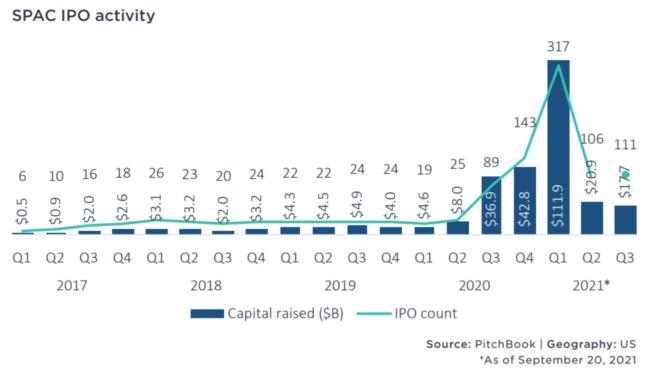
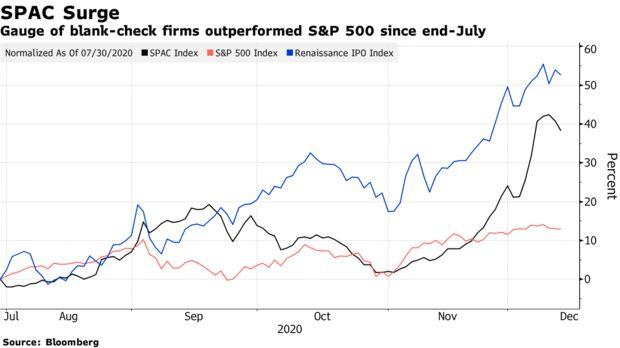
The growth was extraordinary.
| Year | SPAC IPOs | Capital Raised |
| 2019 | 59 | ~$13 billion |
| 2020 | 248 | ~$83 billion |
| 2021 | 613 | ~$145–162 billion |
For the first time in history, SPAC IPOs briefly outnumbered traditional IPOs in the United States.
Many investors assumed this trend would continue indefinitely.
It didn’t.
Industries That Benefited Most
The SPAC wave heavily favored industries built around future growth rather than current profits.
These included:
- Electric vehicles (EV)
- Autonomous driving
- Fintech
- Space technology
- Clean energy
- Biotechnology
- Artificial intelligence
Because SPAC regulations allowed companies to present forward-looking financial projections, startups with limited current revenue could market ambitious growth forecasts.
That flexibility attracted many young companies,but also increased investment risk.
Real Case Study 1: Lucid Motors
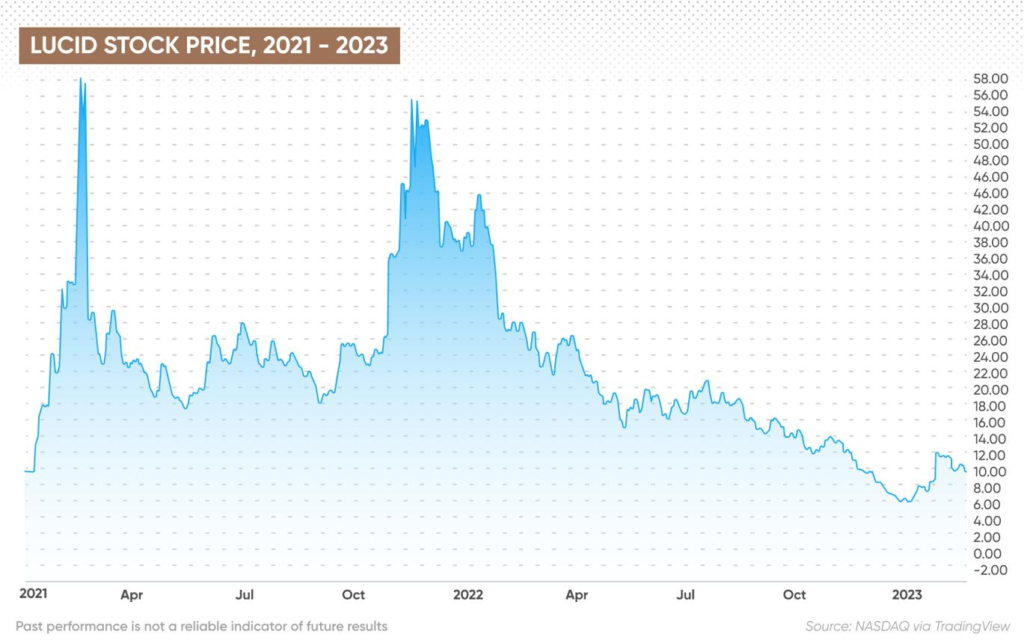
One of the most famous SPAC success stories,and cautionary tales,is Lucid Motors.
Timeline
- Merged with Churchill Capital Corp IV
- Announced in February 2021
- Valuation approached $24 billion
- Investor excitement briefly pushed the implied market value close to $90 billion
Before delivering significant vehicle production, Lucid’s valuation exceeded many established automakers.
Although Lucid eventually began producing luxury electric vehicles, production delays and slower-than-expected demand caused the stock to fall dramatically from its highs.
Lesson
A great product does not automatically justify an extremely high valuation.
Investors who bought purely because of market excitement often suffered large losses.
Real Case Study 2: Lordstown Motors

Lordstown Motors became one of the biggest disappointments of the SPAC era.
The company promised to revolutionize electric pickup trucks after merging through a SPAC in 2020.
However, several problems emerged:
- Production delays
- Questions about preorder quality
- Regulatory investigations
- Cash shortages
Eventually, Lordstown filed for bankruptcy protection in 2023.
Lesson
Future projections should never replace careful analysis of actual business fundamentals.
Even promising industries can contain weak businesses.
Real Case Study 3: SoFi Technologies

Not every SPAC story ended badly.
Fintech company SoFi Technologies merged with a SPAC sponsored by venture capitalist Chamath Palihapitiya.
Unlike many speculative startups, SoFi already had:
- Growing customer numbers
- Real revenue
- Diversified financial products
- A clear long-term strategy
Although its stock experienced volatility after the merger, SoFi continued expanding its banking platform and improving profitability.
Lesson
Strong underlying businesses can eventually recover, even if short-term market sentiment changes.
Why the SPAC Market Cooled Down
The slowdown was caused by several overlapping factors.
1. Unrealistic Valuations
Many companies entered public markets with valuations based on optimistic future expectations rather than present financial performance.
When growth slowed, stock prices corrected sharply.
2. Higher Interest Rates
Beginning in 2022, central banks aggressively increased interest rates to fight inflation.
Higher rates reduced investor appetite for speculative growth companies.
Businesses with profits became more attractive than businesses promising profits years into the future.
3. Rising Redemption Rates
One of the unique protections in SPAC investing is shareholder redemption.
Instead of participating in a merger, investors may redeem shares for approximately the original trust value plus accrued interest.
As confidence declined, redemption rates increased dramatically.
Many SPAC mergers lost most of their cash before completion because shareholders redeemed their investments instead of staying invested.
4. Regulatory Scrutiny


The U.S. Securities and Exchange Commission (SEC) increased oversight of SPAC disclosures.
Regulators questioned:
- optimistic revenue projections
- accounting treatment of warrants
- sponsor incentives
- disclosure quality
Greater regulatory scrutiny reduced speculative enthusiasm and encouraged more conservative deal structures.
What Research Shows
Academic research conducted after the boom found consistent patterns.
Research summarized by Laura Moon’s comprehensive review of the 2020–2021 SPAC market concluded that while SPACs provide an efficient alternative to traditional IPOs, sponsor incentives, dilution, and optimistic projections can negatively affect long-term shareholder returns if investors fail to evaluate deal quality carefully.
S&P Global also found that after the 2021 peak, SPAC issuance declined sharply as market conditions changed and investors became more selective. Institutional sponsors increasingly focused on higher-quality targets instead of pursuing rapid deal volume.
These findings suggest that the structure itself was not the primary problem,poor deal quality and excessive speculation were.
Five Lessons Every Investor Should Learn
1. Hype Is Never an Investment Strategy
Many investors purchased SPAC shares simply because they were trending online.
Always study:
- financial statements
- management quality
- competitive position
- realistic growth expectations
2. Valuation Matters
A wonderful company can still be a poor investment if purchased at an unrealistic price.
Investors should compare valuation with:
- revenue
- earnings potential
- industry peers
- execution risk
3. Understand Sponsor Incentives
SPAC sponsors typically receive founder shares that can become highly valuable if a merger closes.
This creates incentives that may not always perfectly align with ordinary shareholders.
Understanding these incentives is essential before investing.
4. Redemption Rights Provide Protection
Unlike traditional IPO investors, SPAC shareholders have an important advantage.
If they dislike the proposed merger, they can often redeem their shares before completion.
Investors should understand this mechanism before buying.
5. Focus on Business Quality
The companies that have performed relatively better after merging generally shared common characteristics:
- existing revenue
- experienced management
- realistic projections
- manageable debt
- sustainable competitive advantages
Business fundamentals matter far more than market excitement.
Are SPACs Still Relevant Today?
Yes,but the market looks very different.
Today’s SPAC environment emphasizes:
- smaller deal volumes
- stricter due diligence
- improved disclosure
- more institutional participation
- realistic valuations
The speculative boom has faded, but SPACs remain a legitimate financing option for certain companies.
Rather than replacing traditional IPOs, they have become another pathway for businesses to access public markets.
Should Investors Avoid SPACs?
Not necessarily.
SPACs are financial structures,not investments by themselves.
A successful investment depends on:
- the quality of the target company
- sponsor reputation
- valuation
- financial health
- long-term business prospects
Strong companies can succeed through SPAC mergers, while weak companies may fail regardless of how they become public.
Conclusion
The 2020–2021 SPAC boom demonstrated both the strengths and weaknesses of innovative financial markets. SPACs offered private companies a faster path to public markets and gave investors early access to high-growth businesses. However, excessive optimism, inflated valuations, and weak due diligence led many deals to disappoint once market conditions normalized.
The experiences of companies like Lucid Motors, Lordstown Motors, and SoFi Technologies illustrate that outcomes depend on execution, fundamentals, and valuation, not simply the method of going public.
For today’s investors, the biggest lesson is timeless: avoid chasing hype, understand how an investment is structured, evaluate the underlying business carefully, and maintain realistic expectations. The SPAC frenzy may have cooled, but the principles of disciplined investing remain as important as ever.